
What gets rid of sun damage?
By the LUMOS Clinic team · LUMOS Clinic, Basingstoke | 5 minute read
The brown spots on your cheeks, forehead and hands are sun damage, and they're the most common thing people come to us about in autumn. Here's the answer in one line: IPL gets rid of individual spots, chemical peels even out damage across the whole face — and September to March is the best window to treat it.
Now the detail, because you deserve more than one line before spending money.
The two treatments that actually work
IPL (intense pulsed light) — a flash of light passes through the skin and is absorbed by the brown pigment. The pigment shatters into tiny particles, and your body clears them away over the following weeks, the same way it clears a bruise. Best for: individual spots and patches on the face, hands and chest.
Chemical peels — a solution is applied that removes the pigmented top layers of skin. Fresh, even-toned skin comes through as it heals. Best for: damage spread across the whole face, or skin that's dull and rough as well as spotty.
Both are walk-in, walk-out treatments. No needles, no anaesthetic, no recovery beyond a few days of mild flaking or darkening.
Which one do you need?
If you can point at individual spots — “here, here and here” — IPL is usually the answer. If your whole face looks uneven or tired rather than spotty, a course of peels usually serves you better. Plenty of people do best with a combination, and that's normal.
We'll tell you which at a free consultation — and we'll say straight if the answer is neither. Early damage sometimes just needs a good skincare routine and SPF, and we'd rather tell you that than take money for treatment you don't need.
What it costs
Straight from our treatment list:
- IPL pigmentation — from £95 per session. Most people need two to three.
- IPL Illumifacial (full face, includes rejuvenation) — £175 for two sessions, £225 for three.
- AlumierMD peel — £125 for the face, £150 for face, neck and décolletage.
- Facials — from £75, if we recommend starting with skincare and build-up first.
The consultation is free, and there's no pressure to book. Full prices are on our prices page.
What actually happens in the session
IPL: you'll wear small protective goggles, a cool gel goes on the skin, and the light is pulsed over the marks. It feels like a hot flick from an elastic band — over in seconds. Afterwards the spots go darker for a few days (like coffee grounds), then flake off. Allow 20–30 minutes.
Peels: the solution is brushed on, you'll feel some tingling, then it's neutralised. Over the next few days the skin lightly flakes — like mild sunburn peeling — and more even skin comes through. Allow 30–45 minutes.
You can go straight back to normal life after either. You'll need to be careful in the sun for a few weeks — which is exactly why the timing matters.
Why autumn is the best time to do this
Two reasons.
First, treated skin is sun-sensitive for several weeks. From October to March the UK sun is weak, so your results are safer and more predictable.
Second, this summer's damage has now fully arrived. Pigment takes weeks to surface, so the spots you're seeing in September are the finished picture — treat them now and they fade over winter, ready for spring.
The bit nobody tells you
The treatment is only half the job. The pigment we remove is gone for good, but your skin will keep making new pigment every time it meets the sun — it's been doing that your whole life. Daily SPF is the difference between results that last years and results that fade by next summer. If you take one thing from this article, take that.
Real results
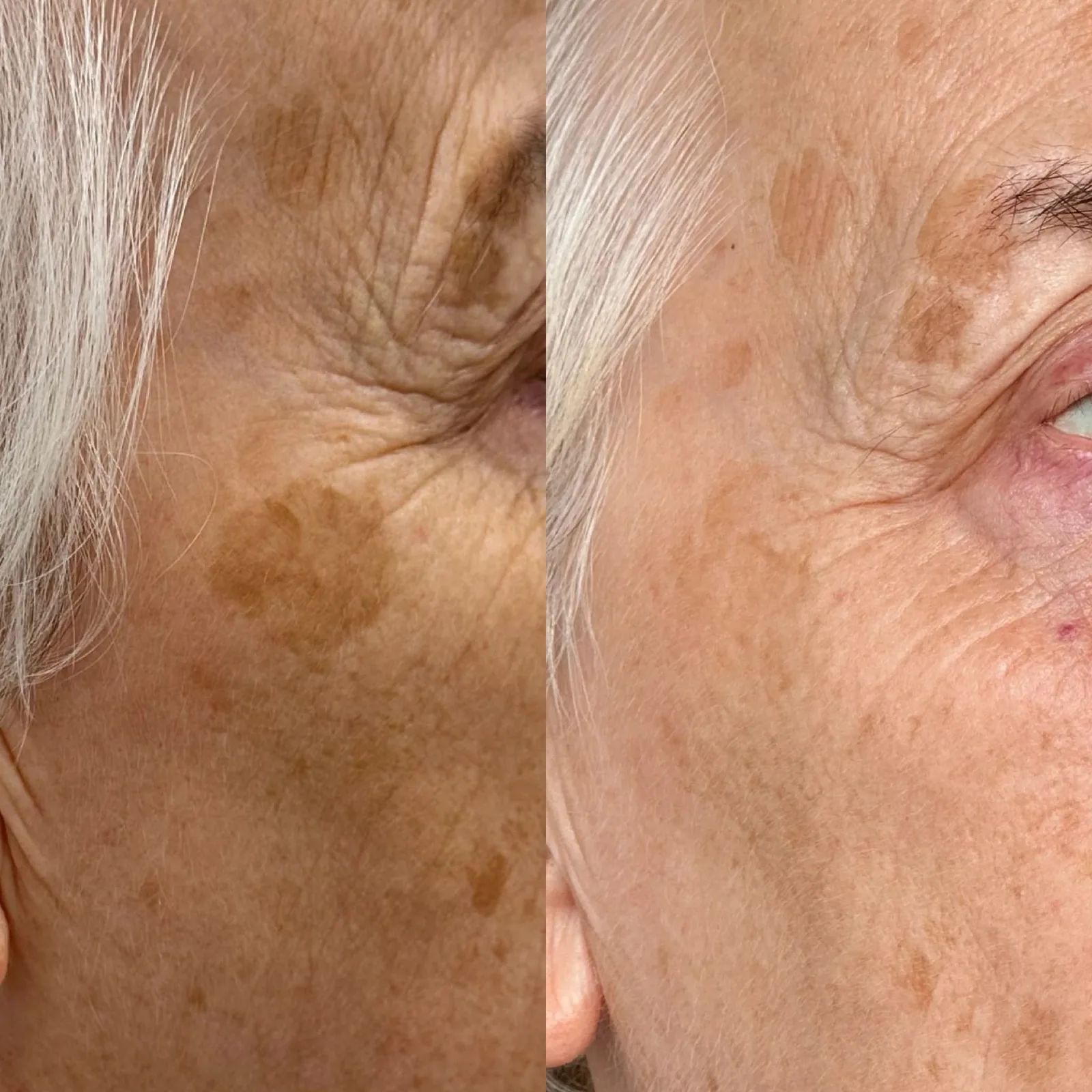
More about IPL for pigmentation
Common questions
What gets rid of sun damage?
IPL for individual spots, peels for damage across the whole face. Both break down or remove the pigment so fresher, even skin comes through. A short course plus daily SPF is the complete answer.
Can sun damage go away on its own?
A fresh tan fades by itself. True sun damage — brown spots built up over years — sits deeper than the skin's natural turnover reaches, so it stays and slowly worsens without treatment.
How many sessions will I need?
Most people need two to three IPL sessions about a month apart, or a course of monthly peels. We confirm the exact plan at your free consultation.
Does it come back after treatment?
The pigment we remove is gone for good. New spots only come from new sun exposure — daily SPF is what protects your results.
Is IPL safe for darker skin tones?
IPL must be set carefully to your skin tone, and for some darker tones it isn't the right tool at all. We assess this at consultation and will tell you honestly if another treatment would serve you better.
How much does it cost?
IPL starts at £95 per session, peels at £125 for the face. The consultation is free and there's no pressure to book.
Related
The IPL treatment page has full detail on the light route, the facials & peels page covers the peel route, and the pigmentation page covers pigmentation more broadly. See also IPL for pigmentation and the IPL & laser aftercare guide.
Noticed new spots since summer?
Autumn is the window to treat them. Book a free consultation and we'll tell you honestly what will work — and what won't.
Book a free consultation